
Quick Connect Fire Hydrant Adapter

A Hydrant Connection That Doesn't Depend on Threads
Threaded hydrant outlets have been the industry default for over a century, and for most of that time, nobody questioned them. But a threaded connection asks a lot of the person making it: correct alignment, several full rotations, and enough torque to seat a seal — all before a single gallon of water moves. Hy-Conn’s quick connect adapter removes that requirement entirely. It’s a patented mechanical fitting that locks onto a standard hydrant outlet with a single motion and comes free just as quickly, with nothing to thread and nothing to strip.
The design didn’t come out of a lab exercise. It came from a firefighter who’d stood at enough hydrants, in enough weather, to know exactly where threaded connections cost time — and built something to close that gap.
The Mechanics Behind the Lock
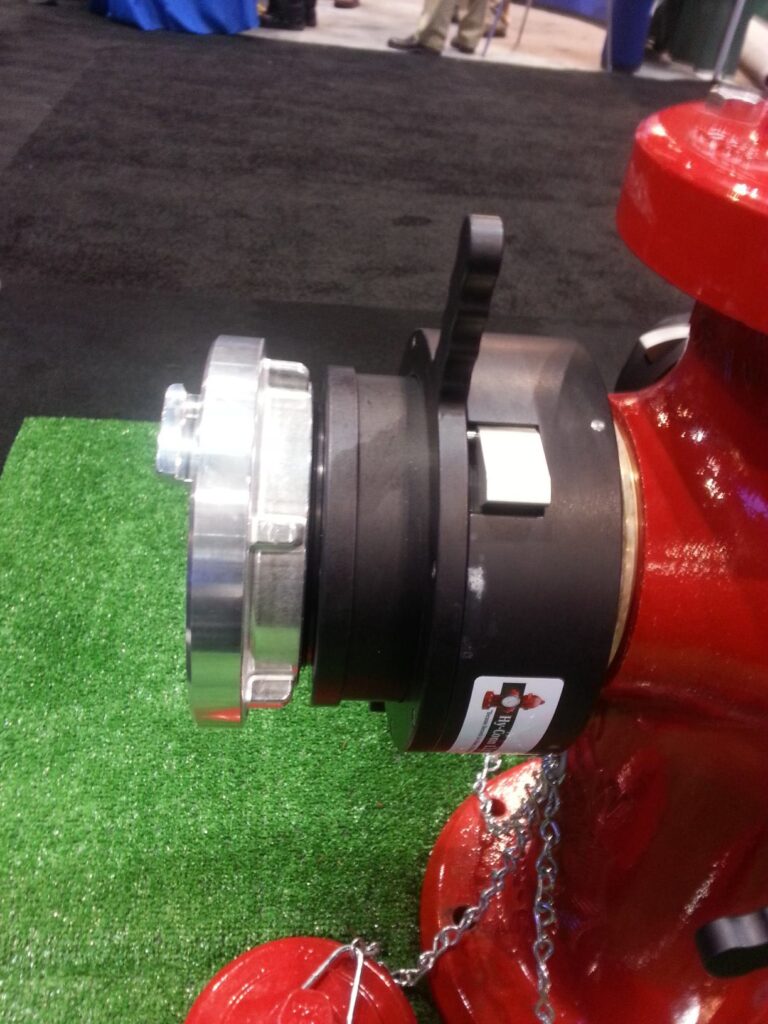
Instead of threads gripping threads, the Hy-Conn adapter uses a captured locking collar that engages the hydrant outlet directly. Set it, and the mechanism closes around the connection point on its own — no spinning, no walking the fitting into alignment by feel. Pulling the release does the reverse: the collar opens and the fitting comes away clean, without the sticking or seizing that worn threaded couplings are prone to.
Because the lock is mechanical rather than frictional, wear doesn’t degrade the connection the way it does with threads. A fitting that seats correctly the first time will seat exactly the same way on its five-hundredth use.
Engineered for Conditions, Not Demonstrations
Most hydrant hardware gets tested somewhere clean and well-lit. Real hydrant work rarely looks like that — it happens at 2 a.m., in freezing rain, with a firefighter’s dexterity cut in half by structural gloves. Hy-Conn’s adapter was built with that reality as the baseline, not an edge case. The locking action doesn’t require fine motor control, and it gives an unmistakable physical click the instant it’s secure, so there’s no need to double-check by sight in poor visibility.
There’s a secondary benefit here too: threaded fittings demand repeated torque and twisting, and that motion takes a physical toll over a career. Removing it isn’t just faster — it’s fewer wrist and shoulder injuries logged over time.
Fitting Any Hydrant You're Likely to Encounter
Hydrant thread patterns aren’t standardized nationally — they vary by manufacturer, by region, and by how old the underlying water system is. That’s historically made adapter compatibility a real headache for departments that respond across jurisdiction lines or under mutual aid. Hy-Conn covers more than 300 active thread configurations across the U.S. and Canada, and where a hydrant falls outside that range, we machine custom threads to match rather than asking an agency to modify its infrastructure.
A Seal That Holds at Full Pressure
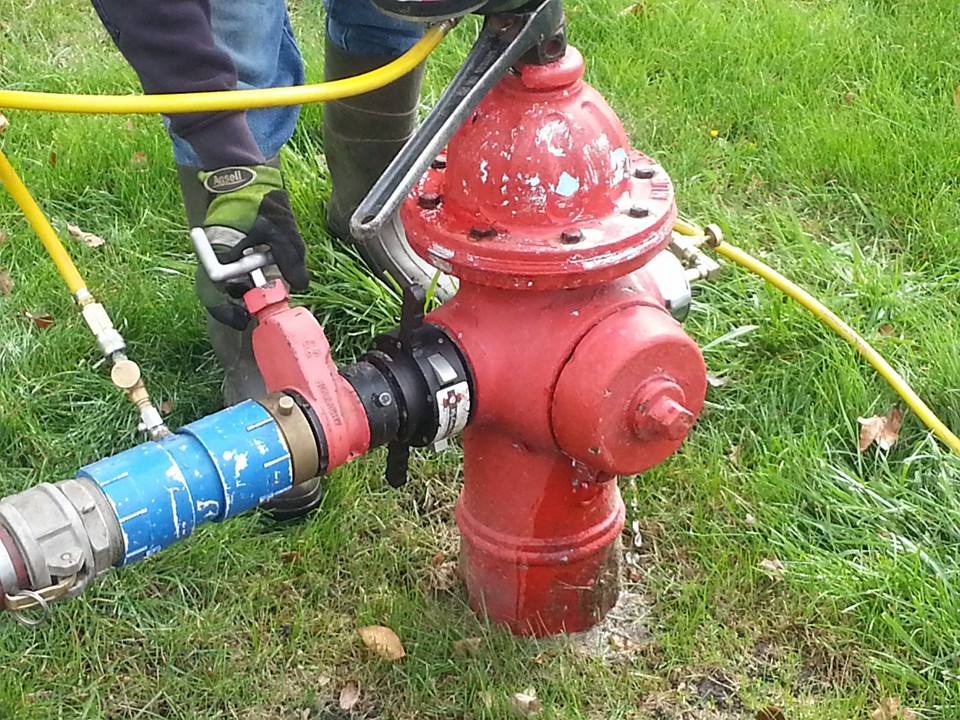
None of the speed matters if the connection weeps under load. Hy-Conn’s sealing surfaces are machined to tolerances tight enough to maintain even contact across the full connection interface, which is what prevents the slow spray and pressure loss that develop around threaded couplings as they age. That holds true whether the fitting is being used for structural firefighting, hydrant flushing, or industrial water transfer — the seal behaves the same regardless of application.
Made In-House, Built to Last
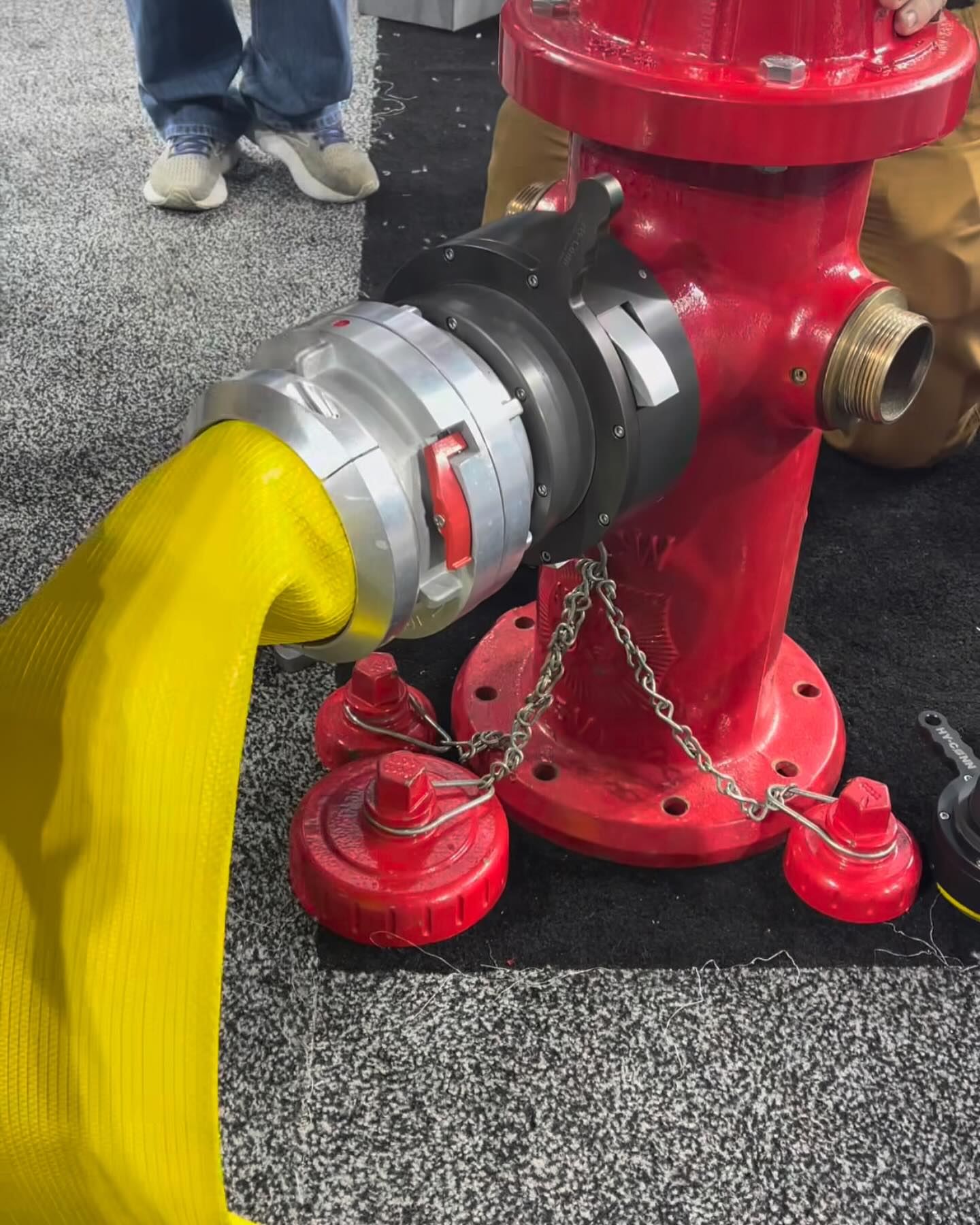
Every adapter is CNC-machined and assembled at our facility in Arkansas — no offshore production, no outsourced components. The materials resist corrosion, and the tolerances are tight enough that a unit performs the same after years in service as it did on day one. For departments managing hydrant hardware across a large fleet, that translates directly into fewer replacement cycles.
Every fitting carries a 3-year limited warranty (main gasket excluded), and registering it puts a department in touch with our own team, not a call center script.
Where This Adapter Shows Up
The fireground is where this technology started, but it hasn’t stayed there. Municipal crews use the same adapter for flushing and flow testing, where repeatability across hundreds of connections matters as much as raw speed. Industrial sites use it for high-pressure transfer work. What ties all of it together is the same underlying problem: threaded connections are slow, and slow is a cost nobody wants to keep paying.
Talk to Us About Your Hydrant Hardware
If your department or facility is still running threaded connections, it’s worth finding out what switching actually looks like. Contact Hy-Conn for specs, thread compatibility, or a quote.